O'Connell Lab Landmark Publications
The α1A/C - and α1B-adrenergic receptors are required for physiological cardiac hypertrophy in the double-knockout mouse. Link to view paper. This paper was the first report to demonstrate that α1-adrenergic receptors are required for physiologic postnatal hypertrophy in heart and required for an adaptive response to pathologic stimuli in the heart. Prior to this report, convention indicated that all receptors that Gαq receptors, like α1-adrenergic receptors, induce pathologic remodeling in heart. Therefore, this paper redines the classic dogma of Gq-receptor signaling in heart.
O'Connell TD, Ishizaka S, Nakamura A, Swigart PM, Rodrigo MC, Simpson GL, Cotecchia S, Rokosh DG, Grossman W, Foster E, Simpson PC. J Clin Invest. 2003 Jun;111(11):1783-91.
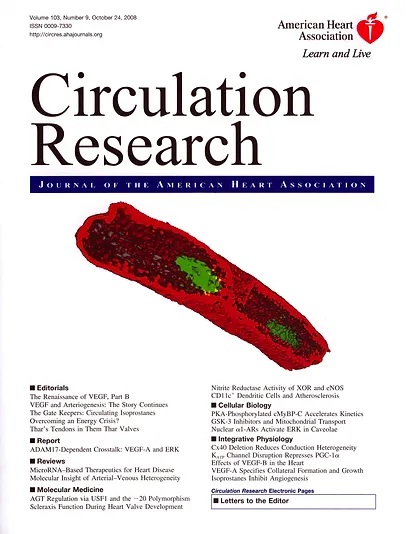
Nuclear α1-Adrenergic Receptors Signal Activated ERK Localization to Caveolae in Adult Cardiac Myocytes. Link to view paper. G-protein coupled receptors are classically believed to function at the cell surface and mediate 'outside-in' signaling to mediate cell function. This paper demonstrated for the first time that endogenous α1-adrenergic receptors localize to and signal at the nucleus in adult cardiac myocytes. This is in contrast to other Gq-receptors like angiotensin and endothelin receptors, which predominantly but not exclusively are found at the cell surface in adult cardiac myocytes. Together with our finding that α1-adrenergic receptors are cardioprotective, the idea that α1-adrenergic receptors localize to the nucleus form the basis of our hypothesis that Gq-receptor signaling is compartmentalized and nuclear Gq-receptor signaling is cardioprotective.
Wright CD, Chen Q, Baye NL, Huang Y, Healy CL, Kasinathan S, O'Connell TD. Circ Res 2008 Oct 24;103(9):992-1000
Omega-3 Fatty Acids Prevent Pressure Overload Induced Cardiac Fibrosis Through Activation of Cyclic GMP/Protein Kinase G Signaling in Cardiac Fibroblasts. Link to view paper. Omega-3 fatty acids prevent sudden death in coronary heart disease, although other protective benefits have yet to be identified. This paper demonstrated for the first time that omega-3 fatty acids prevent fibrosis by blocking activation of fibroblasts, and in so doing, prevent diastolic dysfunction in a mouse model of hypertensive heart disease. Clinically, our findings suggest that omega-3 fatty acids could be useful in preventing fibrosis in patients with hypertensive heart disease and heart failure with preserved ejection fraction, a clinical syndrome for which there is no proven therapy.
Chen J, Shearer GC, Chen Q, Healy CL, Beyer AJ, Nareddy VB, Gerdes AM, Harris WS, O'Connell TD, Wang D. Circulation 2011 Feb 15;123(6):584-93